

Bankruptcy filing costs depend largely on whether you file under Chapter 7 or Chapter 13 and whether you hire an attorney.
Some people choose to represent themselves because they believe they cannot afford an attorney.
Filing for bankruptcy pro se can be risky because the process involves complex rules, forms, statutes, and court decisions. Most people end up hiring aan attorney to navigate the legal process.
Attorney Fees
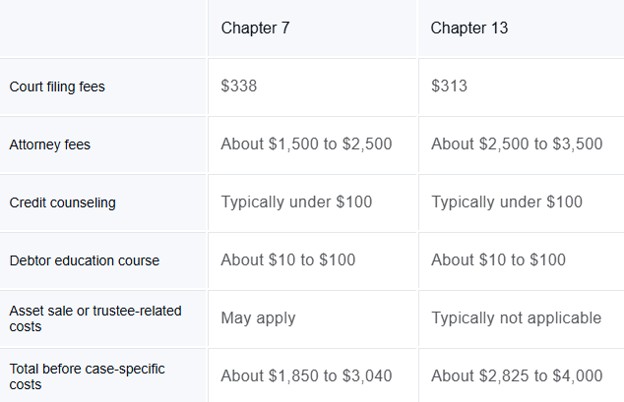
While some attorneys charge a flat rate for bankruptcy services, others charge an hourly rate. In general, Chapter 7 filers pay about $1,500 to $2,500 in attorney fees upfront, while Chapter 13 filers often pay about $2,500 to $3,500, with higher costs possible depending on location and case complexity. Chapter 13 fees are usually built into your monthly debt repayment plan.
If your case involves a business, significant property, disputed debts, or other complications, it may require more attorney time and result in higher fees. Chapter 13 cases cost more because they require attorneys to develop a repayment plan and often involve additional work over the course of the case.
While these costs are high, hiring an attorney ensures that your dischargeable debts are managed correctly.
Chapter 7 vs. Chapter 13 filing fees
The cost of bankruptcy includes separate court and attorney fees. At a minimum, every filer must pay court filing fees directly to the bankruptcy court, along with credit counseling costs.
The basic court fees for Chapter 7 and Chapter 13 break down as follows:
Additional Court Fees
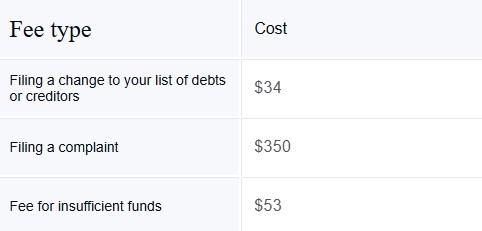
The U.S. Courts may charge for specific services throughout your case. The following table outlines common administrative fees accurately as of publication but note that this list is not exhaustive of every fee you might encounter.
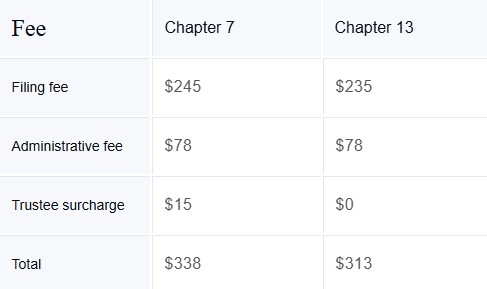
Chapter 7 filers who meet income requirements and cannot afford installments may ask the court to waive the filing fee. This option is available to those earning less than 150% of the federal poverty level. Chapter 13 fees cannot be waived, but eligible filers may request an installment plan.
Basic filing fees may not cover all court-related expenses. Additional services and actions during a bankruptcy case can add to the total cost.
Additional costs of filing for bankruptcy
In addition to court and attorney fees, bankruptcy may involve smaller required or case-specific expenses. Although these costs are usually modest, they can still strain an already tight budget:
- Credit counseling fees: You are typically required to attend at least one credit counseling session before filing. You can work with a credit counselor or take an online class, and classes usually cost under $100. The U.S. Department of Justice maintains a list of approved agencies you can use.
- Debt education course: After filing, you must complete a financial management Depending on the provider, it can cost $10 to $100.
Click here to read more.
If you have questions on this topic or are in a financial crisis and considering filing for bankruptcy, contact an experienced Miami bankruptcy attorney who can assist you and address all your options. As an experienced CPA as well as a proven bankruptcy lawyer, Timothy Kingcade knows how to help clients take full advantage of the bankruptcy laws to protect their assets and get successful results. Since 1996 Kingcade Garcia McMaken has been helping people from all walks of life build a better tomorrow. Our attorneys help thousands of people every year take advantage of their rights under bankruptcy protection to restart, rebuild, and recover. The day you hire our firm; we will contact your creditors to stop the harassment. You can also find useful consumer information on the Kingcade Garcia McMaken website at www.miamibankruptcy.com.