
Credit Card Debt

Americans Are Falling Behind on their $1.25 Trillion Credit Card Debt

How much is too much credit card debt?

Surging inflation and rising interest rates have left millions of Americans relying on credit cards to cover everyday expenses. Middle-class households are struggling the most to pay down these balances. More families have shifted to a pattern of “survival debt.” Survival debt refers to money borrowed explicitly to cover basic, essential living expenses, like food, housing, utilities, and medical expenses, rather than discretionary purchases.

America’s credit card balance is a staggering $1.25 trillion, up from $1.18 trillion in the same quarter last year. The average interest rates on credit cards rose to 21% in February, from 14.6% in February 2022, according to a survey by the Federal Reserve.

With the rising cost of food, housing, and healthcare there is less money to pay down credit card debt. Consumers have been forced to make some tough decisions. Not wanting to lose their car or their home, people are likely to stop paying their credit cards, first.

Credit counseling agencies have seen an uptick in clients by 60%, since 2018. The National Foundation for Credit Counseling, a network of nonprofits that helps people reduce credit-card debt, said it had 24% more clients in January than a year earlier.

People carry an average of about $6,500 to $6,700 in credit card debt, according to credit-reporting agencies. The percentage of cardholders with balances of more than $10,000 has risen in communities across different income levels since 2018, analysis from the Urban Institute data shows. Last year, 17% of cardholders in low-income communities held balances greater than that amount, 20% in medium-income communities and 25% in higher-income communities.

While each consumer’s financial situation is different, there are ways to determine if you are carrying too much credit card debt.

Consider your answers to the following questions:

  • Is your credit card debt impacting your financial and emotional health? Carrying large amounts of credit card debt can damage your credit score and cause you to experience financial and emotional stress. A good rule of thumb is to ensure your monthly payments are not more than 10 percent of your monthly income.
  • Are you paying only the minimum? Credit cards typically have low monthly minimum payments, but that doesn’t mean they are affordable just because you can cover that amount. If you are only able to make the minimum payment, that can be a sign you have too much credit card debt.
  • Is your credit card debt impacting your credit score? Credit cards can help your credit score- or hurt it, depending on how you use them. It is recommended that you keep your credit utilization below 30 percent. Having significant credit card debt can have a negative impact on your credit score. This can make other debts, like your mortgage and car payments more expensive.

As bankruptcy attorneys, we see credit card debt as one of the most common problems facing those with serious financial challenges.

Filing for bankruptcy is a viable option for those struggling with insurmountable credit card debt. Chapter 7 is the fastest form of consumer bankruptcy and forgives most unsecured debts like credit card debt, medical bills, and personal loans.  There are certain qualifications a consumer must meet in regard to income, assets, and expenses to file for Chapter 7 bankruptcy, which is determined by the bankruptcy means test.

Click here to read more on this story.

Credit Card Debt

Credit Card Debt Tops $1.28 Trillion in U.S.

Americans owe $1.28 trillion on their credit cards, according to a new report by the Federal Reserve Bank of New York on household debt. That’s a 5.5% jump from the previous year. Near the end of the year, credit card debt typically increases during peak holiday shopping season.

Credit cards are one of the most expensive ways to borrow money today. Approximately, 175 million people in the U.S. have credit cards, and while some pay their bills in full each month, roughly 60% of credit card users carry a balance from one month to the next, according to the New York Fed.

A separate report by the debt management company, Achieve, revealed that more than half, 55% of consumers carry credit card balances to cover essential expenses.

There’s also a growing number of homeowners falling behind on their mortgage payments. Increased mortgage delinquency rates have been more pronounced in low-income areas.

Housing affordability challenges are not only weighing on ‘would-be’ home buyers, but also a growing share of existing homeowners, new data suggests. Late-stage mortgage delinquencies — those with payments at least 90 days past due — rose 18.6% in December from a year earlier, according to new research from credit scoring company, VantageScore.

Click here to read more.

If you have questions on this topic or are in a financial crisis and considering filing for bankruptcy, contact an experienced Miami bankruptcy attorney who can assist you and address all of your options. As an experienced CPA as well as a proven bankruptcy lawyer, Timothy Kingcade knows how to help clients take full advantage of the bankruptcy laws to protect their assets and get successful results. Since 1996 Kingcade Garcia McMaken has been helping people from all walks of life build a better tomorrow. Our attorneys help thousands of people every year take advantage of their rights under bankruptcy protection to restart, rebuild, and recover. The day you hire our firm; we will contact your creditors to stop the harassment. You can also find useful consumer information on the Kingcade Garcia McMaken website at www.miamibankruptcy.com.

Consumer Bankruptcy

New Year, Fresh Start. Bankruptcy Can Help You Take Back Control of Your Finances

The New Year is a popular time for financial check-ins, motivating people to set goals like paying off debt. For those struggling with overwhelming debt, bankruptcy can be a legal pathway to a fresh start, eliminating eligible debts.

Before filing for bankruptcy, certain steps should be taken to ensure the case goes smoothly and is successful.

  1. Stop using credit cards.

One of the reasons people file for bankruptcy is due to overwhelming credit card debt. As soon as someone decides to file for bankruptcy, it is always recommended that he or she immediately ceases using their credit cards. Bankruptcy courts will view creating more debt when the person knows that it will never be repaid as a form of bankruptcy fraud.

  1. Pay for the essentials.

Many filers find themselves behind on bills prior to filing, including rent and utilities. Prior to filing for bankruptcy, make sure you are caught up on essential living expenses, including paying rent and utilities.

  1. End automated payments.

Many consumers set up automatic payments with their bank and creditors, allowing creditors to auto debit their bank account. While this may be a convenient method, once a bankruptcy case is filed, it can quickly become a giant inconvenience. With the automatic stay, creditors are prohibited from directly soliciting payments on debts owed by the filer, but this does not necessarily mean these payments cannot be made via automatic monthly withdrawals that were in place prior to filing. To avoid this problem, prior to filing, consumers should sign on to all online accounts with creditors and end automatic payments.

  1. Gather financial records.

Organize recent pay stubs (60 days), bank statements, tax returns (2 years), asset details (home, cars), and creditor statements.

  1. File your tax return.   

If someone is considering bankruptcy, taxes are often the last thing on that person’s mind. However, it is important that a consumer considering bankruptcy file his or her tax returns prior to filing. After all, the bankruptcy court will be looking at the consumer’s income and assets when deciding bon what type of bankruptcy can be pursued, and tax returns are vital documents needed to make that determination.

5. Review Your Credit Report.

Get a copy of your credit report for free by visiting Annual Credit Report.com – Home Page. Free weekly online credit reports are available from Equifax, Experian and TransUnion. Credit reports play an important role in your financial life, and we encourage you to regularly check your credit history to ensure accuracy.

You can regain control of your financial future in 2026. The consultation is free; the relief is real. Since 1996 Kingcade Garcia McMaken has been helping people from all walks of life build a better tomorrow. Our attorneys help thousands of people every year take advantage of their rights under bankruptcy protection to restart, rebuild, and recover. The day you hire our firm; we will contact your creditors to stop the harassment. You can also find useful consumer information on the Kingcade Garcia McMaken website at www.miamibankruptcy.com.

Free In-Office Consultation

305-285-9100

1370 Coral Way, Miami FL 33145

Consumer Bankruptcy, Debt Relief

Debt Relief vs. Bankruptcy in 2025

Debt relief and bankruptcy can offer real financial help in a challenging economic environment- but there are a few things you should know about each option.

American households are struggling with debt like never before, as total credit card balances have soared past $1.21 trillion nationally. With credit card interest rates approaching record highs and the cost of living rising, many people have found themselves trapped in a cycle of making minimum payments.

Amid the financial pressure, people are exploring different options to regain control over their debt.

Debt relief programs, such as credit card settlement plans, are increasingly accessible, while bankruptcy remains an option for those facing overwhelming debt.

Each option has unique benefits, costs, and long-term implications.

Debt relief programs only address unsecured debt, like credit cards, personal loans, and medical bills. These type programs cannot help with secured debts, like a mortgage or car loan.

filing for bankruptcy

Bankruptcy, on the other hand, can wipe out certain unsecured debts entirely, and in some cases, provide options for addressing secured debt. Understanding exactly what you owe, and to whom is the first step in deciding which approach to choose.

Debt relief programs work best if you have a steady income that allows you to make monthly payments. If your earnings are inconsistent or barely cover your living expenses, these programs can prove challenging to sustain.

For those whose income will not support repayment, bankruptcy provides a better option. However, post-bankruptcy budgeting is essential to avoid falling back into debt.

Choosing between bankruptcy and debt relief is a personal decision influenced by your total debt, income, credit outlook, and long-term goals.

Debt relief can offer structured repayment and lower interest costs without the long-lasting credit hit of bankruptcy, but it requires discipline and consistent payments. Bankruptcy, however, can immediately wipe out your debt and provide you with a fresh financial start when debt becomes unmanageable.

As you weigh your options, it is important to review each one carefully, ideally with a financial counselor, certified debt specialist, or experienced bankruptcy attorney before deciding.

Click here to read more on this story.

If you have questions on this topic or are in a financial crisis and considering filing for bankruptcy, contact an experienced Miami bankruptcy attorney who can assist you and address all of your options. As an experienced CPA as well as a proven bankruptcy lawyer, Timothy Kingcade knows how to help clients take full advantage of the bankruptcy laws to protect their assets and get successful results. Since 1996 Kingcade Garcia McMaken has been helping people from all walks of life build a better tomorrow. Our attorneys help thousands of people every year take advantage of their rights under bankruptcy protection to restart, rebuild, and recover. The day you hire our firm; we will contact your creditors to stop the harassment. You can also find useful consumer information on the Kingcade Garcia McMaken website at www.miamibankruptcy.com.
Bankruptcy Filings, Bankruptcy Trends, Chapter 7 Bankruptcy, Consumer Bankruptcy

Personal Bankruptcy Filings are Soaring – But How Do You Know When You Need a ‘Financial Reset’?

Chapter 7 consumer bankruptcy filings have increased 15% in the first nine months of 2025, according to American Bankruptcy Institute. That amounts to 249,152 filings so far this year as compared to the 216,773 filed last year for the same period, according to data from Epiq AACER. Individual Chapter 13 filings also increased by 4.3%.

The rise in bankruptcy filings can be attributed to the growing financial pressure families are facing across the country. Inflation has outpaced wage growth for 43 percent of Americans.

Chapter 7 bankruptcy is a powerful legal tool that allows those in financial crisis to cancel debts such as credit card debt, medical debts, and personal loans.

As soon as a Chapter 7 bankruptcy case is filed, the consumer receives immediate protection from his or her creditors. This protection comes from the automatic stay that is issued by the court upon filing. The automatic stay puts a pause on all collection actions, including collection phone calls, legal proceedings to collect on a debt, wage garnishments, evictions, and foreclosures. The automatic stay also gives consumers a chance to breathe and work with the court and bankruptcy trustee.

It can be difficult to determine whether it is the right time to file for Chapter 7 bankruptcy. Typically, those that file should meet the following criteria:

  • Have a low credit score.
  • Have no foreseeable way to pay off debt within the next few years.
  • Do not possess expensive property.
  • Have more than $10,000 in debt
  • Struggle to make payments.
  • Are in fear of legal action being taken against them due to debt.

An alternative to Chapter 7 bankruptcy is Chapter 13 bankruptcy. Most commonly, those that opt to file for Chapter 13 fail to qualify for Chapter 7 due to their income. They may also own a property that is not protected by Chapter 7 bankruptcy exemptions. An experienced bankruptcy attorney can provide crucial assistance in evaluating your finances to determine which plan is best suited for your situation.

If you have questions or are in a financial crisis and considering filing for bankruptcy, contact an experienced Miami bankruptcy attorney who can assist you and address all of your options. As an experienced CPA as well as a proven bankruptcy lawyer, Timothy Kingcade knows how to help clients take full advantage of the bankruptcy laws to protect their assets and get successful results. Since 1996 Kingcade Garcia McMaken has been helping people from all walks of life build a better tomorrow. Our attorneys’ help thousands of people every year take advantage of their rights under bankruptcy protection to restart, rebuild and recover. The day you hire our firm, we will contact your creditors to stop the harassment. You can also find useful consumer information on the Kingcade Garcia McMaken website at www.miamibankruptcy.com.
SOURCE: Personal Bankruptcy Filings Are Soaring This Year Due to ‘Mounting Financial Pressure’ — but Do You Know What It Means To File and the Alternatives?

Credit Card Debt

Three Simple Mistakes That Can Drive Up Your Credit Card Debt

Credit card debt has become a growing financial strain for millions of Americans. The latest data from the Federal Reserve Bank of New York, reveals U.S. consumers owe a collective $1.21 trillion in credit card debt. With an average interest rate of 22%, even small mistakes can set off a chain reaction that leads to mounting balances.

Here are three mistakes that make your credit card debt more expensive.

1. Paying your credit card bill late

Missing your due date doesn’t just hurt your credit score, it costs you money. Most card issuers will charge customers a late fee of up to $35. In addition, when your payment is late, your ‘grace period’ can disappear, which can cause interest to accrue immediately on new purchases.

2. Allowing a balance to carry over from one month to the next

Carrying a credit card balance from one month to the next is one of the fastest ways for your debt to spiral out of control. You may think it’s manageable to carry a credit card balance over from one month to the next, especially if you’re only short by a few hundred dollars each month. However, unlike installment loans, credit card interest compounds daily. That means every day your balance remains unpaid, interest is added, and then you’re charged interest on the interest.

3. Not taking advantage of balance transfers, debt consolidation or other available strategies.

Another credit card mistake that can cost you is sticking to the status quo when you have options to lower your costs. For example, many credit card companies offer 0% balance transfer promotions for 12 to 21 months, giving you a chance to make real progress on your balance without added interest. While there will typically be a small transfer fee tied to these promotions, the savings can be substantial if you’re strategic about paying down your balance during the promotional period.

Click here to read more.

As bankruptcy attorneys, we see credit card debt as one of the most common problems facing those with serious financial challenges.

Filing for bankruptcy is a viable option for those struggling with insurmountable credit card debt. Chapter 7 is the fastest form of consumer bankruptcy and forgives most unsecured debts like credit card debt, medical bills, and personal loans.  There are certain qualifications a consumer must meet in regard to income, assets, and expenses to file for Chapter 7 bankruptcy, which is determined by the bankruptcy means test.

If you have questions on this topic or are in financial crisis and considering filing for bankruptcy, contact an experienced Miami bankruptcy attorney who can advise you of all of your options. As an experienced CPA as well as a proven bankruptcy lawyer, Timothy Kingcade knows how to help clients take full advantage of the bankruptcy laws to protect their assets and get successful results. Since 1996 Kingcade Garcia McMaken has been helping people from all walks of life build a better tomorrow. Our attorneys help thousands of people every year take advantage of their rights under bankruptcy protection to restart, rebuild and recover. The day you hire our firm; we will contact your creditors to stop the harassment. You can also find useful consumer information on the Kingcade Garcia McMaken website at www.miamibankruptcy.com.
Credit Card Debt

Credit Card Debt Report for 2025

Credit card interest rates are at an all-time high, averaging above 20 percent.  The implications of credit card debt are far-reaching.  Here are several key insights from Bankrate’s 2025 Credit Card Debt Report.

  • 46% of credit cardholders report having a credit card balance. About a quarter (23%) do not think they will ever be able to pay it off.
  • Emergency and day-to-day expenses, such as groceries, childcare and utilities, are the most common reasons for credit card debt.
  • Credit card debt causes Americans to hold off on important money milestones. Saving for an emergency (34 percent), investing (23 percent) and buying a vehicle (21 percent) are the most likely to be set back.

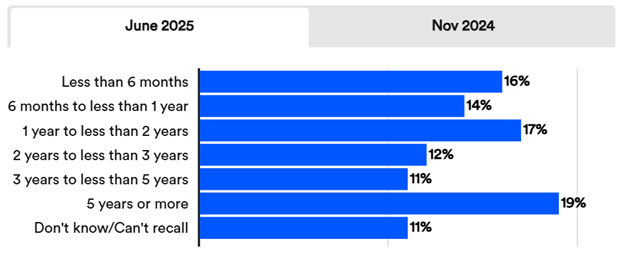
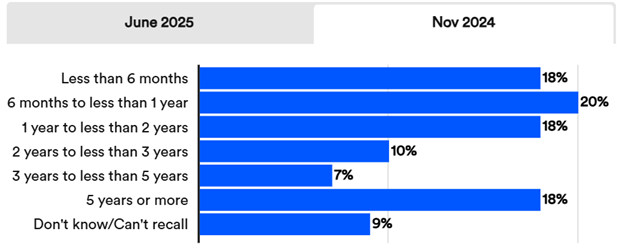
Approximately how long have you been carrying a balance on your credit card(s)?

Note: Among respondents who carry a balance on their credit card(s). Source: Bankrate surveys, June 2-4, 2025, November 13-15, 2024.

Credit Card Debt

Credit Card Stats 2025

Click here to read more.

As bankruptcy attorneys, we see credit card debt as one of the most common problems facing those with serious financial challenges.

Filing for bankruptcy is a viable option for those struggling with insurmountable credit card debt. Chapter 7 is the fastest form of consumer bankruptcy and forgives most unsecured debts like credit card debt, medical bills, and personal loans.  There are certain qualifications a consumer must meet in regard to income, assets, and expenses to file for Chapter 7 bankruptcy, which is determined by the bankruptcy means test.

If you have questions on this topic or are in financial crisis and considering filing for bankruptcy, contact an experienced Miami bankruptcy attorney who can advise you of all of your options. As an experienced CPA as well as a proven bankruptcy lawyer, Timothy Kingcade knows how to help clients take full advantage of the bankruptcy laws to protect their assets and get successful results. Since 1996 Kingcade Garcia McMaken has been helping people from all walks of life build a better tomorrow. Our attorneys help thousands of people every year take advantage of their rights under bankruptcy protection to restart, rebuild and recover. The day you hire our firm; we will contact your creditors to stop the harassment. You can also find useful consumer information on the Kingcade Garcia McMaken website at www.miamibankruptcy.com.
Credit Card Debt

Can You Inherit Credit Card Debt?

Credit card debt continues to put a drain on household budgets. The average monthly credit card balance is up to $6,618, according to Experian. At the same time, the Federal Reserve reports that average interest rates on credit cards remain at 21.37%, with many card issuers charging rates around 30% and higher.

If this is something you’re struggling with, you may wonder what happens to this debt if you pass away.  Does a loved one inherit your credit card debt, or does it simply die with you?

Typically, the deceased person’s estate settles the debt. If the estate lacks the funds to pay it off, the remaining balance may go unpaid and not be passed on to surviving family members.

The family is not liable for the balance unless legally connected to the debt.  For example, if the person is a cosigner on the debt or it’s a joint credit card. Spouses in community property states (and domestic partners in some cases) could be responsible if the debt was taken out during the marriage.

There are many misconceptions about credit card debt and who is responsible for it when someone dies.  If a parent dies with credit card debt, the child inherits the debt is a common assumption.  This is false.  Unless the child was a cosigner or joint account holder.

If you are unsure who is legally responsible for a debt, it is important to consult with an experienced attorney.  If debt collectors are harassing you, remember that the Fair Debt Collection Practices Act (FDCPA) protects you from threats, false claims and repeated calls.

RELATED RESOURCES:

What Happens to Debt After You Die? U.S. News & World Report

Can You Inherit Credit Card Debt? Experts Weigh in CBS News.com

Bankruptcy Trends, Credit Card Debt

More People Filing for Bankruptcy Have Retail Credit Card Debt

Store credit cards, which most major retailers offer, carry a much higher interest rate than traditional credit cards. Since 2021, the number of people with retail credit card debt that file for bankruptcy has been rising at a faster rate than new filings overall, according to proprietary data and analytics from Stretto.

Between 2023 and 2024, new consumer bankruptcy filings rose 5.8% but the number of cases that included retail credit card debt rose 12%, a CNBC analysis of the data shows.

Click here to read more on this story.

While each consumer’s financial situation is different, there are ways to determine if your credit card debt is too high.  Consider your answers to the following questions:

  • Is your credit card debt impacting your financial and emotional health? Carrying large amounts of credit card debt can damage your credit score and cause you to experience financial and emotional stress. A good rule of thumb is to ensure your monthly payments are not more than 10 percent of your monthly income.
  • Are you paying only the minimum? Credit cards typically have low monthly minimum payments, but that doesn’t mean they are affordable just because you can cover that amount. If you are only able to make the minimum payment, that can be a sign you have too much credit card debt.
  • Is your credit card debt impacting your credit score? Credit cards can help your credit score- or hurt it, depending on how you use them. It is recommended that you keep your credit utilization below 30 percent. Having significant credit card debt can have a negative impact on your credit score. This can make other debts, like your mortgage and car payments more expensive.

As bankruptcy attorneys, we see credit card debt as one of the most common problems facing those with serious financial challenges.

Filing for bankruptcy is a viable option for those struggling with insurmountable credit card debt. Chapter 7 is the fastest form of consumer bankruptcy and forgives most unsecured debts like credit card debt, medical bills, and personal loans.  There are certain qualifications a consumer must meet in regard to income, assets, and expenses to file for Chapter 7 bankruptcy, which is determined by the bankruptcy means test.

If you have questions on this topic or are in financial crisis and considering filing for bankruptcy, contact an experienced Miami bankruptcy attorney who can advise you of all of your options. As an experienced CPA as well as a proven bankruptcy lawyer, Timothy Kingcade knows how to help clients take full advantage of the bankruptcy laws to protect their assets and get successful results. Since 1996 Kingcade Garcia McMaken has been helping people from all walks of life build a better tomorrow. Our attorneys help thousands of people every year take advantage of their rights under bankruptcy protection to restart, rebuild and recover. The day you hire our firm; we will contact your creditors to stop the harassment. You can also find useful consumer information on the Kingcade Garcia McMaken website at www.miamibankruptcy.com.
Consumer Debt, Credit Card Debt

The Emotional Burden of Debt on Your Mental Health

Today, as the U.S. is facing economic uncertainty and high inflation, consumers are feeling an increase in financial pressure.  Everyday costs are on the rise, and struggling to afford the basics is a challenge for many. 

The result? Higher levels of debt are becoming more widespread.

Debt can cause a lot of damage, and not just to your credit score. Carrying any amount of debt can be stressful, but carrying substantial amounts of debt can be debilitating to a consumer’s emotional well-being. Credit card debt can cause stress, which can lead to depression, anxiety, and other health problems. 

Over half of the adults in the U.S. with a debt problem are also living with a mental health issue, according to a study from the Royal College of Psychiatrists. 

High levels of debt can also lead to stress and arguments within marriages. In fact, arguments about money are one of the top causes of divorce in America, after infidelity. Debt and stress often go hand in hand. It’s natural to worry about debt and if you will ever get out of it.   

According to the Stress in America survey conducted by the American Psychological Association, 87 percent of Americans reported the rising cost of living as a significant source of stress. The survey also found an increase in the percentage of Americans stressed about the economy, and finances in general.

Click here to read more. 

If you have questions on this topic or are in a financial crisis and considering filing for bankruptcy, contact an experienced Miami bankruptcy attorney who can advise you of all of your options. As an experienced CPA as well as a proven bankruptcy lawyer, Timothy Kingcade knows how to help clients take full advantage of the bankruptcy laws to protect their assets and get successful results. Since 1996 Kingcade Garcia McMaken has been helping people from all walks of life build a better tomorrow. Our attorneys’ help thousands of people every year take advantage of their rights under bankruptcy protection to restart, rebuild and recover. The day you hire our firm, we will contact your creditors to stop the harassment. You can also find useful consumer information on the Kingcade Garcia McMaken website at www.miamibankruptcy.com.