
Credit Score

Credit Scores Drop at Rates Not Seen Since the Great Recession

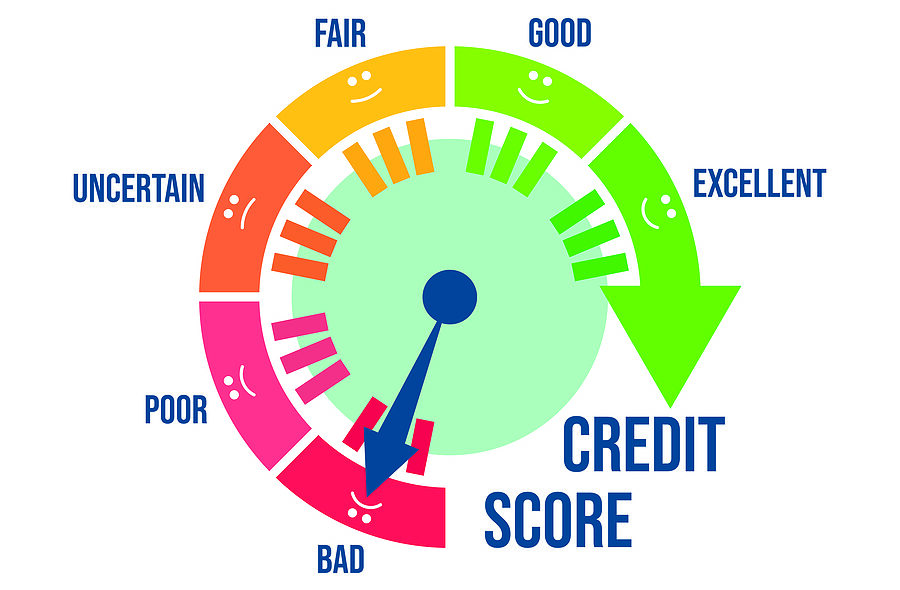
As Americans struggle to keep up with the cost of living and the return of student debt payments, their credit scores are taking a hit. The national average FICO score dropped by two points this year, the highest since 2009, according to recent data.  These numbers are down for the second year in a row.  FICO also found that delinquency rates on auto loans, credit cards and personal loans are at or near their highest levels since 2009.

Younger Americans are facing even more financial pressure with high student loan debt and low entry-level hiring. Gen Z borrowers experienced an average credit score drop of three points — the biggest decline of any age group since 2020 during the pandemic, according to FICO.

FICO found that 14% of Gen Zers have had a large credit score decline of 50 points or more in the past year — more than any other year and double the decline of 2021.

The US Department of Education’s COVID-19 relief for student loans has ended. The 0% interest rate ended Sept. 1, 2023, and payments restarted in October 2023. The Department of Education restarted collecting federal student loans in default in May. Student loan delinquencies were not reported on credit files until February.

Between February and April, 6.1 million consumers had a student loan delinquency added to their credit file, according to FICO. That means the student loan delinquency rate has climbed to a record high of 29% among the 21 million borrowers with a student debt payment due.

The impact of these late student debt payments and the fact that Gen Z doesn’t have a long track record of making credit payments, which builds their credit scores. This makes their credit scores vulnerable to more volatility, both up and down.

FICO found that 64% of Gen Z and 61% of Millennials with student loans rely on credit cards, buy-now-pay-later loans or personal loans to bridge financial gaps.

Click here to read more on this story.

If you have any questions on this topic or are in financial crisis and considering filing for bankruptcy, contact an experienced bankruptcy attorney who can advise you of all your options. As an experienced CPA as well as a proven bankruptcy lawyer, Timothy Kingcade knows how to help clients take full advantage of the bankruptcy laws to protect their assets and get successful results. Since 1996 Kingcade & Garcia, P.A. has been helping people from all walks of life build a better tomorrow. Our attorneys’ help thousands of people every year take advantage of their rights under bankruptcy protection to restart, rebuild and recover.

Credit Card Debt, Debt Relief

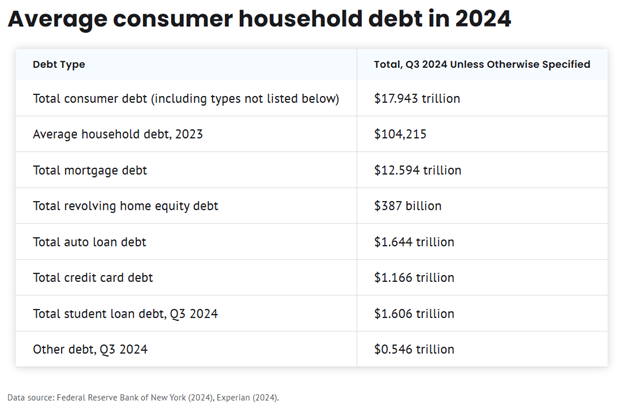
Total Household Debt by Type

American household debt stands at a whopping $17.943 trillion dollars. Mortgage debt makes up 70% of that.  Inflation has contributed to more debt and the average debt rising in nearly every category compared to 2020. This includes total household debt, credit card debt, mortgage debt, and auto loan debt. Total debt is up by over $2.5 trillion since 2020.

Average consumer household debt in 2024

According to the latest Household Debt and Credit survey, Americans owe $1.166 trillion in credit card debt as of the third quarter of 2024. That’s a record high, up from $1.162 trillion in the second quarter. Americans had an average of $6,501 in in credit card debt in the third quarter of 2023, according to Experian.

Based on data from the second quarter in 2023, Gen X carries the highest average credit card balance, $8,870, while Gen Z carries the lowest average credit card balance, with $3,148.

Paying off debt and finding relief.

It may seem like you have too much debt to ever get out of. However, the first step is to address your debt.  Understand the total amount of debt you have. From there you can determine what type of debt you hold, like credit card debt, mortgage, or auto loan. Then it is important to note how much you owe, what the interest rate is, and what the minimum payment amount is for each type of debt you own.

As bankruptcy attorneys, we see credit card debt as one of the most common problems facing those with serious financial challenges.

Filing for bankruptcy is a viable option for those struggling with insurmountable credit card debt. Chapter 7 is the fastest form of consumer bankruptcy and forgives most unsecured debts like credit card debt, medical bills, and personal loans.

If you have questions on this topic or are in financial crisis and considering filing for bankruptcy, contact an experienced Miami bankruptcy attorney who can advise you of all of your options. As an experienced CPA as well as a proven bankruptcy lawyer, Timothy Kingcade knows how to help clients take full advantage of the bankruptcy laws to protect their assets and get successful results. Since 1996 Kingcade Garcia McMaken has been helping people from all walks of life build a better tomorrow. Our attorneys help thousands of people every year take advantage of their rights under bankruptcy protection to restart, rebuild and recover. The day you hire our firm; we will contact your creditors to stop the harassment. You can also find useful consumer information on the Kingcade Garcia McMaken website at www.miamibankruptcy.com.

SOURCE: Average American Household Debt in 2024: Facts and Figures