Credit Card Debt

Three Simple Mistakes That Can Drive Up Your Credit Card Debt

Credit card debt has become a growing financial strain for millions of Americans. The latest data from the Federal Reserve Bank of New York, reveals U.S. consumers owe a collective $1.21 trillion in credit card debt. With an average interest rate of 22%, even small mistakes can set off a chain reaction that leads to mounting balances.

Here are three mistakes that make your credit card debt more expensive.

1. Paying your credit card bill late

Missing your due date doesn’t just hurt your credit score, it costs you money. Most card issuers will charge customers a late fee of up to $35. In addition, when your payment is late, your ‘grace period’ can disappear, which can cause interest to accrue immediately on new purchases.

2. Allowing a balance to carry over from one month to the next

Carrying a credit card balance from one month to the next is one of the fastest ways for your debt to spiral out of control. You may think it’s manageable to carry a credit card balance over from one month to the next, especially if you’re only short by a few hundred dollars each month. However, unlike installment loans, credit card interest compounds daily. That means every day your balance remains unpaid, interest is added, and then you’re charged interest on the interest.

3. Not taking advantage of balance transfers, debt consolidation or other available strategies.

Another credit card mistake that can cost you is sticking to the status quo when you have options to lower your costs. For example, many credit card companies offer 0% balance transfer promotions for 12 to 21 months, giving you a chance to make real progress on your balance without added interest. While there will typically be a small transfer fee tied to these promotions, the savings can be substantial if you’re strategic about paying down your balance during the promotional period.

Click here to read more.

As bankruptcy attorneys, we see credit card debt as one of the most common problems facing those with serious financial challenges.

Filing for bankruptcy is a viable option for those struggling with insurmountable credit card debt. Chapter 7 is the fastest form of consumer bankruptcy and forgives most unsecured debts like credit card debt, medical bills, and personal loans.  There are certain qualifications a consumer must meet in regard to income, assets, and expenses to file for Chapter 7 bankruptcy, which is determined by the bankruptcy means test.

If you have questions on this topic or are in financial crisis and considering filing for bankruptcy, contact an experienced Miami bankruptcy attorney who can advise you of all of your options. As an experienced CPA as well as a proven bankruptcy lawyer, Timothy Kingcade knows how to help clients take full advantage of the bankruptcy laws to protect their assets and get successful results. Since 1996 Kingcade Garcia McMaken has been helping people from all walks of life build a better tomorrow. Our attorneys help thousands of people every year take advantage of their rights under bankruptcy protection to restart, rebuild and recover. The day you hire our firm; we will contact your creditors to stop the harassment. You can also find useful consumer information on the Kingcade Garcia McMaken website at www.miamibankruptcy.com.

Bankruptcy Law, Consumer Bankruptcy

Personal Loans After Bankruptcy. Can You Get One?

YES, it is possible to get a personal loan after bankruptcy.

The good news is that after bankruptcy, you can immediately take steps that can have a positive impact on your credit history. While each lender will have certain eligibility requirements, for example, a minimum credit score and minimum income.  A descent income and a low debt-to-income ratio can be compensating factors. Especially, if you have taken steps to rebuild your credit.

Here are some important tips for rebuilding your credit after bankruptcy.

  1. Pull a copy of your credit reports for free by visiting https://www.annualcreditreport.com/.
  2. Make sure your credit reports are accurate. The accounts that were discharged in bankruptcy should be closed. If any discrepancies are found, these errors should be reported right away to the credit bureaus via a formal dispute.
  3. Prioritize making future payments on time. It sounds simple, but on-time payments and responsible credit card use can significantly help you recover from bankruptcy.
  4. Creating a budget is important after completing a bankruptcy case. Write down all necessary living expenses and track how much of the consumer’s income can be used to go towards paying these costs. A good rule of thumb when budgeting is to follow the 50/30/20 rule. What this entails is 50 percent of the consumer’s income goes towards meeting his or her needs. Another 30 percent would be set aside for items that are considered not necessary or are wanted, while 20 percent of the monthly income goes towards savings.

Getting a personal loan after bankruptcy.

If you are interested in applying for a personal loan after bankruptcy, here are some important steps to take.

  1. Review your credit report. If you find mistakes, contact the credit bureau before applying for the loan.
  2. Know your loan amount. A personal loan can be helpful, but it still needs to be repaid. That means borrowing within your means and only for what you need.
  3. Research lenders. Look at minimum and maximum loan amounts, eligibility requirements, APRs, repayment terms, fees, and customer reviews.
  4. Get prequalified: Once you have your list of potential lenders, see if you can get prequalified online.
  5. Have all your documents ready. Make sure you have pay stubs, tax statements, and bank statements ready to support your application. After that, it’s in the lender’s hands. You may get a response immediately, or within a couple of days, or up to a week, depending on the type of lender.


Click here to read more.

If you are in financial crisis and considering filing for bankruptcy, contact an experienced Miami bankruptcy attorney who can advise you of all your options. As an experienced CPA as well as a proven bankruptcy lawyer, Timothy Kingcade knows how to help clients take full advantage of the bankruptcy laws to protect their assets and get successful results. Since 1996 Kingcade & Garcia, P.A. has been helping people from all walks of life build a better tomorrow. Our attorneys’ help thousands of people every year take advantage of their rights under bankruptcy protection to restart, rebuild and recover. The day you hire our firm, we will contact your creditors to stop the harassment. You can also find useful consumer information on the Kingcade & Garcia website at www.miamibankruptcy.com.

Credit Card Debt

Credit Card Debt Report for 2025

Credit card interest rates are at an all-time high, averaging above 20 percent.  The implications of credit card debt are far-reaching.  Here are several key insights from Bankrate’s 2025 Credit Card Debt Report.

  • 46% of credit cardholders report having a credit card balance. About a quarter (23%) do not think they will ever be able to pay it off.
  • Emergency and day-to-day expenses, such as groceries, childcare and utilities, are the most common reasons for credit card debt.
  • Credit card debt causes Americans to hold off on important money milestones. Saving for an emergency (34 percent), investing (23 percent) and buying a vehicle (21 percent) are the most likely to be set back.

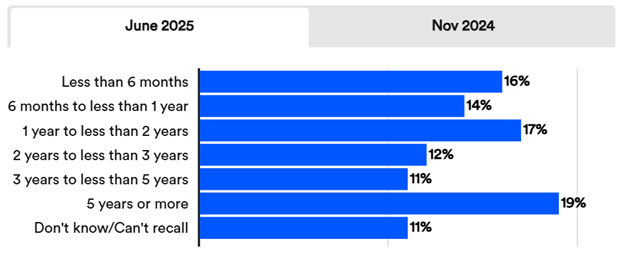
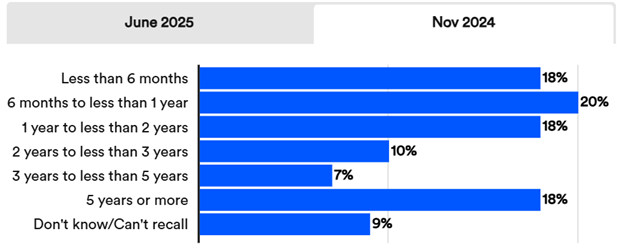
Approximately how long have you been carrying a balance on your credit card(s)?

Note: Among respondents who carry a balance on their credit card(s). Source: Bankrate surveys, June 2-4, 2025, November 13-15, 2024.

Credit Card Debt

Credit Card Stats 2025

Click here to read more.

As bankruptcy attorneys, we see credit card debt as one of the most common problems facing those with serious financial challenges.

Filing for bankruptcy is a viable option for those struggling with insurmountable credit card debt. Chapter 7 is the fastest form of consumer bankruptcy and forgives most unsecured debts like credit card debt, medical bills, and personal loans.  There are certain qualifications a consumer must meet in regard to income, assets, and expenses to file for Chapter 7 bankruptcy, which is determined by the bankruptcy means test.

If you have questions on this topic or are in financial crisis and considering filing for bankruptcy, contact an experienced Miami bankruptcy attorney who can advise you of all of your options. As an experienced CPA as well as a proven bankruptcy lawyer, Timothy Kingcade knows how to help clients take full advantage of the bankruptcy laws to protect their assets and get successful results. Since 1996 Kingcade Garcia McMaken has been helping people from all walks of life build a better tomorrow. Our attorneys help thousands of people every year take advantage of their rights under bankruptcy protection to restart, rebuild and recover. The day you hire our firm; we will contact your creditors to stop the harassment. You can also find useful consumer information on the Kingcade Garcia McMaken website at www.miamibankruptcy.com.

Consumer Bankruptcy, Florida Super Lawyers, Legal Awards

Miami Bankruptcy Attorney Timothy S. Kingcade Named a Florida Super Lawyer 12 Consecutive Years

MIAMI (June 26, 2025) – Managing Shareholder, Timothy S. Kingcade of the Miami-based bankruptcy and foreclosure defense law firm of Kingcade Garcia McMaken has been selected to the 2025 Florida Super Lawyers list. This is the 12th consecutive year Kingcade has been selected to the Florida Super Lawyers list (2014-2025) in the practice area of consumer bankruptcy. The top 5% of lawyers in Florida are selected by Super Lawyers.

“It is an honor to be named to the Florida Super Lawyers list this year. The recognition is a testament to the hard work and dedication that comes with providing exceptional legal representation to our clients,” said Managing Shareholder, Timothy S. Kingcade. “I would like to thank my colleagues for their nominations and support, and Super Lawyers for acknowledging my professional achievements.”

Attorney Kingcade practices exclusively in the field of bankruptcy law, handling Chapter 7 and Chapter 13 filings for the Southern District of Florida.  As an experienced CPA and proven bankruptcy attorney, Kingcade knows how to help his clients take full advantage of their rights under the bankruptcy laws to restart, rebuild, and recover.

Super Lawyers is a listing of outstanding lawyers from more than 70 practice areas who have attained a high degree of peer recognition and professional achievement, representing the top 5 percent of Florida lawyers. The annual selections are made using a patented multiphase process which results in a credible, comprehensive, and diverse listing of exceptional attorneys. Attorneys are nominated by their peers, evaluated by a research team, and reviewed by a blue-ribbon panel before being selected for the final list. The Super Lawyers list is published nationwide in Super Lawyers Magazines and in leading city and regional magazines and newspapers across the country.

###

Miami-based Kingcade Garcia McMaken, P.A. was established by managing partner and bankruptcy attorney, Timothy S. Kingcade in 1996. The firm represents clients throughout the State of Florida in Chapter 7 bankruptcy and foreclosure defense cases. The firm is committed to providing personalized service to every client, clearly explaining the options according to the unique circumstances of his or her life. The office environment and the service provided are centered on a culture of superior client care for the financially disenfranchised. All partners and associates at Kingcade Garcia McMaken, P.A. specialize in consumer bankruptcy and foreclosure and have dedicated their practices to this area of the law. Additionally, all attorneys and staff members at the firm are bilingual speaking Spanish.

Bankruptcy Law, Consumer Debt, Debt Relief

When Is an Emergency Bankruptcy Filing Necessary?

An emergency bankruptcy filing is a streamlined process used in situations where the filer urgently needs to stop a creditor from collecting on a debt. It is often referred to as a skeleton bankruptcy filing because it’s so simplified.

The filer receives the same benefits and protections they would in a standard bankruptcy case. Like the automatic stay, which puts an immediate halt to all collection activity. The emergency filing gives the same protection after completing certain online forms and submitting the remaining required documents later.

The shortened process allows you to start a bankruptcy case by submitting an incomplete, otherwise “bare bones” filing. The best part about an emergency bankruptcy filing is that it can be completed online and in a matter of minutes.

A specific emergency isn’t required for a skeleton filing. Anyone who needs to file quickly to prevent an unwanted event from happening can use the process. For instance, bankruptcy can stop:

After filing the petition, the bankruptcy automatic stay goes into place and stops these types of issues immediately.

When is an emergency bankruptcy filing appropriate? It is appropriate when a debtor is facing an imminent foreclosure on his or her home or a repossession of his or her vehicle. Since the amount of paperwork needed to formally open a bankruptcy case is significant and cannot be done overnight, it may not be done quickly enough to stop the foreclosure or repossession from happening. However, with an emergency bankruptcy petition, it is possible to be done quickly enough to get the automatic stay and protect the filer’s assets. The key is the filer must file the additional documents within 14 days or his or her bankruptcy petition will be dismissed. The filer must also comply with other rules, which will be provided on the court’s website.

Certain documents are required for an emergency bankruptcy filing. The bankruptcy petition is the essential part of the bankruptcy case, which will determine which chapter of the bankruptcy code forms the basis of the filing. The creditors’ contact information is also required with the emergency bankruptcy filing, along with a credit counseling certificate of completion or a waiver request, along with a Form B121. The filing will also be accompanied by a filing fee, although the filer can submit a request for a fee waiver. It is also possible to submit the fee in installments if this makes the situation more financially feasible.

Occasionally, the filer may also need to complete additional paperwork, as required by the court. It is important that the filer complies with these requirements, or the court will dismiss the bankruptcy petition within a certain required period, usually within 14 days.  

If you have questions on this topic or are in financial crisis and considering filing for bankruptcy, contact an experienced Miami bankruptcy attorney who can advise you of all of your options. As an experienced CPA as well as a proven bankruptcy lawyer, Timothy Kingcade knows how to help clients take full advantage of the bankruptcy laws to protect their assets and get successful results. Since 1996 Kingcade Garcia McMaken has been helping people from all walks of life build a better tomorrow. Our attorneys help thousands of people every year take advantage of their rights under bankruptcy protection to restart, rebuild and recover. The day you hire our firm, we will contact your creditors to stop the harassment. You can also find useful consumer information on the Kingcade Garcia McMaken website at www.miamibankruptcy.com.

Source: JUSTIA.com

Bankruptcy Filings, Bankruptcy Trends, Consumer Bankruptcy

Experts Warn of a Summer Bankruptcy Spike Amid Economic Instability

A recent report suggests that bankruptcy filings could soon be on the rise due to the economic hardships many families are facing.

The average American household carries over $105,000 in consumer debt. LegalShield’s Bankruptcy Index suggests that filings this summer could spike to a level not seen since the start of the COVID-19 pandemic.

If you are borrowing to make ends meet every month, bankruptcy can provide you with a way out. There are two paths for individuals considering personal bankruptcy. Filing for Chapter 7 involves liquidating assets to pay off debts, while Chapter 13 allows individuals to keep some assets and restructure their debt.

Certain debts, such as alimony and child support, cannot be discharged in bankruptcy. Student loan debt might be included, but only under specific circumstances. Credit counseling is another option. By following a strict budget and negotiating lower interest rates on outstanding debt, it is possible to get your finances under control.

Click here to read more.

If you have questions on this topic or are in a financial crisis and considering filing for bankruptcy, contact an experienced Miami bankruptcy attorney who can advise you of all of your options. As an experienced CPA as well as a proven bankruptcy lawyer, Timothy Kingcade knows how to help clients take full advantage of the bankruptcy laws to protect their assets and get successful results. Since 1996 Kingcade Garcia McMaken has been helping people from all walks of life build a better tomorrow. Our attorneys’ help thousands of people every year take advantage of their rights under bankruptcy protection to restart, rebuild and recover. The day you hire our firm, we will contact your creditors to stop the harassment. You can also find useful consumer information on the Kingcade Garcia McMaken website at www.miamibankruptcy.com.

Consumer Debt, Credit Card Debt

The Emotional Burden of Debt on Your Mental Health

Today, as the U.S. is facing economic uncertainty and high inflation, consumers are feeling an increase in financial pressure.  Everyday costs are on the rise, and struggling to afford the basics is a challenge for many. 

The result? Higher levels of debt are becoming more widespread.

Debt can cause a lot of damage, and not just to your credit score. Carrying any amount of debt can be stressful, but carrying substantial amounts of debt can be debilitating to a consumer’s emotional well-being. Credit card debt can cause stress, which can lead to depression, anxiety, and other health problems. 

Over half of the adults in the U.S. with a debt problem are also living with a mental health issue, according to a study from the Royal College of Psychiatrists. 

High levels of debt can also lead to stress and arguments within marriages. In fact, arguments about money are one of the top causes of divorce in America, after infidelity. Debt and stress often go hand in hand. It’s natural to worry about debt and if you will ever get out of it.   

According to the Stress in America survey conducted by the American Psychological Association, 87 percent of Americans reported the rising cost of living as a significant source of stress. The survey also found an increase in the percentage of Americans stressed about the economy, and finances in general.

Click here to read more. 

If you have questions on this topic or are in a financial crisis and considering filing for bankruptcy, contact an experienced Miami bankruptcy attorney who can advise you of all of your options. As an experienced CPA as well as a proven bankruptcy lawyer, Timothy Kingcade knows how to help clients take full advantage of the bankruptcy laws to protect their assets and get successful results. Since 1996 Kingcade Garcia McMaken has been helping people from all walks of life build a better tomorrow. Our attorneys’ help thousands of people every year take advantage of their rights under bankruptcy protection to restart, rebuild and recover. The day you hire our firm, we will contact your creditors to stop the harassment. You can also find useful consumer information on the Kingcade Garcia McMaken website at www.miamibankruptcy.com.

Tax Debt

When Can Taxes Be Discharged in Bankruptcy?

If you are considering filing for bankruptcy, you may be wondering if your tax debts can be discharged. Although the automatic stay will delay the IRS from contacting you about your debts, taxes are treated differently than other kinds of debt when you file bankruptcy.

If you can prove the tax debt is the result of fraud or mistake, you may be able to get it discharged.  Also, if you can show that paying your taxes would create an undue hardship, this can allow you to have your tax debt discharged.

Income tax is the only kind of tax debt that can be discharged in Chapter 7 bankruptcy.  In Chapter 13 bankruptcy, tax debt can generally not be discharged. Instead, it can be repaid throughout the life of your Chapter 13 repayment plan, which can last 3-5 years.

Here are three basic rules that will tell you if your tax debts are eligible for discharge.

  1. The Three-Year Rule. Your tax debts must be three years old from the date they were due, not from the date that you filed. Tax returns are due on April 15th each year. Calculate three years from the time the taxes were due.
  2. Your Tax Returns Must Have Been Filed for Two Years Before Bankruptcy. Taxes must be filed for two years prior to the bankruptcy filing to prevent delinquent taxpayers from filing late returns one day and bankruptcy the next.
  3. The Taxes Must Have Been Assessed More Than 240 Days Ago. The IRS must formally determine that you owe the taxes you are trying to eliminate in bankruptcy more than 240 days before you file the paperwork with the court. Note that an offer in compromise will delay the 240-day rule while it is pending plus an additional 30 days.

Tax Debt in Chapter 7 vs. Chapter 13 Bankruptcy:

Your tax debt can be discharged under Chapter 7 if:

  • It is income tax.
  • The debt is at least three years old.
  • You did nothing fraudulent to evade paying your taxes.
  • You filed a tax return for the debt you hope to discharge at least two years before filing for bankruptcy. A late filing beyond the allowed extensions could disqualify your debt as dischargeable.
  • You must pass the 240-day rule, meaning the IRS must have assessed the tax debt at least 240 days before your filing.

Tax Debt in Chapter 13 Bankruptcy

Chapter 13 bankruptcy can be a better option in dealing with tax debt under the following conditions:

  • Tax debt older than three years might be forgiven, depending on your amount of disposable income (deducting necessary expenses).
  • Discharged tax debt will not incur additional interest or penalties.
  • IRS tax liens can be satisfied in a Chapter 13 repayment plan.
  • The IRS must abide by your Chapter 13 repayment plan, provided all income is included in the plan and you meet all current tax obligations.

It is important to remember that there is no ‘one-size-fits-all’ answer to when taxes can be discharged in bankruptcy.  The answer often depends on the type of bankruptcy being filed and circumstances surrounding the case.

If you are in financial crisis and considering filing for bankruptcy, contact an experienced Miami bankruptcy attorney who can advise you of all your options. As an experienced CPA as well as a proven bankruptcy lawyer, Timothy Kingcade knows how to help clients take full advantage of the bankruptcy laws to protect their assets and get successful results. Since 1996 Kingcade & Garcia, P.A., has been helping people from all walks of life build a better tomorrow. Our attorneys’ help thousands of people every year take advantage of their rights under bankruptcy protection to restart, rebuild and recover. The day you hire our firm, we will contact your creditors to stop the harassment. You can also find useful consumer information on the Kingcade & Garcia website at www.miamibankruptcy.com.

SOURCE: https://www.debt.org/bankruptcy/does-bankruptcy-clear-tax-debt/


Bankruptcy Filings, Bankruptcy Trends

Bankruptcy Filings See Noticeable Increase in November

Leading U.S. bankruptcy data provider, Epiq AACER’s latest report revealed a 6% year-over-year increase in total bankruptcy filings in November 2024, reaching 40,271 compared to 37,907 in November 2023. Individual bankruptcy filings increased 7%, reflecting the growing financial pressures among consumers and businesses.

Key Findings in The Report Include:

  • Overall Individual Bankruptcy Filings: Registered a 7% year-over-year increase, with 37,826 filings in November 2024 compared to 35,446 individual bankruptcy filings in November 2023.
  • Individual Chapter 7 Filings: Increased 14% year-over-year to 22,886 in November 2024, up from 20,149 in November 2023.
  • Individual Chapter 13 Filings: Decreased 3% year-over-year to 14,858, compared to 15,241 in November 2023.
  • Commercial Bankruptcy Filings: Declined 1% to 2,445 in November 2024, down from 2,461 a year earlier.
  • Small Business (Subchapter V) Filings: Rose 28% year-over-year, with 206 filings in November 2024, compared to 161 in November 2023.
  • Commercial Chapter 11 Filings: Fell 22% to 680 in November 2024, down from 865 in November 2023, impacted by high-profile cases such as WeWork in the prior year.
  • Total Filings (Month-over-Month): Declined 15% from October’s 47,114 due to fewer business days and the Thanksgiving holiday.
  • Consumer Filings (Month-over-Month): Decreased 15% from October’s 44,515 filings.
  • Commercial Chapter 11 Filings (Month-over-Month): Increased 20% from October’s 565 cases.
  • Subchapter V Filings (Month-over-Month): Rose 2% from October’s 201 filings.

It’s anticipated the rate of new filings will increase once the holiday season ends and it is expected that the new administration’s planned regulatory changes will influence filings into 2025.

Click here to read more.

If you have questions on this topic or are in financial crisis and considering filing for bankruptcy, contact an experienced Miami bankruptcy attorney who can advise you of all of your options. As an experienced CPA as well as a proven bankruptcy lawyer, Timothy Kingcade knows how to help clients take full advantage of the bankruptcy laws to protect their assets and get successful results. Since 1996 Kingcade Garcia McMaken has been helping people from all walks of life build a better tomorrow. Our attorneys help thousands of people every year take advantage of their rights under bankruptcy protection to restart, rebuild and recover. The day you hire our firm; we will contact your creditors to stop the harassment. You can also find useful consumer information on the Kingcade Garcia McMaken website at www.miamibankruptcy.com.

SOURCE: https://www.acainternational.org/news/bankruptcy-filings-see-notable-increases-in-november-2024/

Bankruptcy Law, Consumer Bankruptcy

What Assets Can Creditors Seize in Bankruptcy?

Bankruptcy filers often fear losing everything they own when going through a Chapter 7 or Chapter 13 bankruptcy case. You may think that filing for bankruptcy means you have to give up your home, your car, and other important assets.  This is simply not true. Laws are in place to help protect you, while also providing creditors with a portion of debt repayment.

All nonexempt assets may be used to repay your creditors in a Chapter7 bankruptcy. These include:

  • Vehicles
  • Land
  • Houses
  • Investment Properties
  • Items of value, like jewelry artwork.

However, many Chapter 7 cases are no-asset cases, meaning the debtor gives up no possessions. This happens for two reasons. First, you can allot for basic assets, called exemptions that are necessary for day-to-day living.  For example, the homestead exemption that protects your primary residence. Your vehicle that you need to get to and from work. Personal items and household goods, tools of the trade (i.e. – items you own and use to make a living) are all protected.

The U.S. Bankruptcy Code and Florida bankruptcy laws protect a great deal of a consumer’s property, if used appropriately. The State of Florida has some of the most generous bankruptcy exemptions in the country, but these exemptions only apply to individuals who meet certain residency requirements. For these exemptions to apply, the consumer must have lived in the state for at least two years before filing. Otherwise, federal exemptions apply.

Click here to read more.

If you have questions on this topic or are in financial crisis and considering filing for bankruptcy, contact an experienced Miami bankruptcy attorney who can advise you of all of your options. As an experienced CPA as well as a proven bankruptcy lawyer, Timothy Kingcade knows how to help clients take full advantage of the bankruptcy laws to protect their assets and get successful results. Since 1996 Kingcade Garcia McMaken has been helping people from all walks of life build a better tomorrow. Our attorneys help thousands of people every year take advantage of their rights under bankruptcy protection to restart, rebuild and recover. The day you hire our firm, we will contact your creditors to stop the harassment. You can also find useful consumer information on the Kingcade Garcia McMaken website at www.miamibankruptcy.com.