Bankruptcy Law, Wage Garnishment

How to Stop a Wage Garnishment in Florida

Wage garnishment is a legal process in which a person’s earnings are required by court order to be withheld by an employer for the payment of a debt.

Filing for bankruptcy in Florida puts an automatic stay on wage garnishment, which immediately stops Florida wage garnishment. The automatic stay lasts for as long as the bankruptcy. With the automatic stay in place, you will be able to take home your entire paycheck.

Foreclosure Defense, Foreclosures

Foreclosure Filings Increase Following End of CFPB Restrictions

Foreclosure filings reported in January 2022 were up by nearly 30 percent from a month prior and up by over 139 percent from a year ago, according to figures from the U.S. Foreclosure Market Report. A total of 23,204 U.S. properties were reported as having foreclosure filings.

The fact that foreclosure filings were on the rise does not come as a surprise for financial experts who have been keeping an eye on the housing market. Normally, foreclosure filings slow down around the holidays, picking up again after the first of the year. However, this year, the filings were a little more than in previous years, showing more of a spike in filings than a slow increase.

student loan debt

A Divorce May Not Free You from your Ex-Spouse’s Student Loan Debt

Most people assume that when they get a divorce, they will walk away free and clear from their spouse’s student loan debt. After all, it was the spouse who incurred the debt, so why should the other spouse be on the hook for this debt? Unfortunately, a divorce decree may not be enough to free someone from their ex-spouse’s student loan debt.

One reason a person might find themself responsible for their ex-spouse’s student loan debt has to do with joint consolidation. This federal program was short-lived, but many people took advantage of it while it was available. In fact, nearly 14,000 student loan borrowers participated in the joint consolidation program, which Congress ended in 2006. Joint consolidation allowed married couples to take their separate student loan debts and combine them into one monthly payment with a lower interest rate. However, once these debts are combined, it can be difficult to separate them in the event of a divorce.

Consumer Debt, Credit Card Debt

Consumer Debt Reaches a Record-Breaking $15.6 Trillion

Consumer debt hit an all-time high at the end of 2021, reaching a total of $15.6 trillion. According to figures from the Federal Reserve New York district, this figure represents a year-over-year increase of $333 billion during the fourth quarter of 2021, as well as a $1 trillion increase for the entire year.

This quarterly consumer debt increase is the largest one seen since 2007. Looking at it from an annual perspective, this increase is the largest one since 2003.

Credit Card Debt

Red Flags That Indicate Dangerous Credit Card Habits

Credit card spending can quickly become a bad habit that can get out of control. Certain behaviors can end up dragging the consumer deeper into debt. It is important that the consumer identify these spending habits ahead of time and spot red flags before falling deeper into a debt trap.

Many consumers fall into the trap of only making the minimum monthly payment listed on their credit card statements. It can be tempting to make that small payment instead of paying off the balance in full or making at least a substantial payment towards the principal. However, minimum monthly payments only end up covering the interest accrued during that month. In the end, the consumer makes absolutely no progress towards paying down the balance owed, and the consumer will find that the balance never goes down. At the very least, the consumer should make more than the minimum payment on a monthly basis in order to avoid falling into this debt trap.

Medical Debt

Laws in 10 States Provide Financial Assistance for Low-Income Patients, Help with Medical Debt

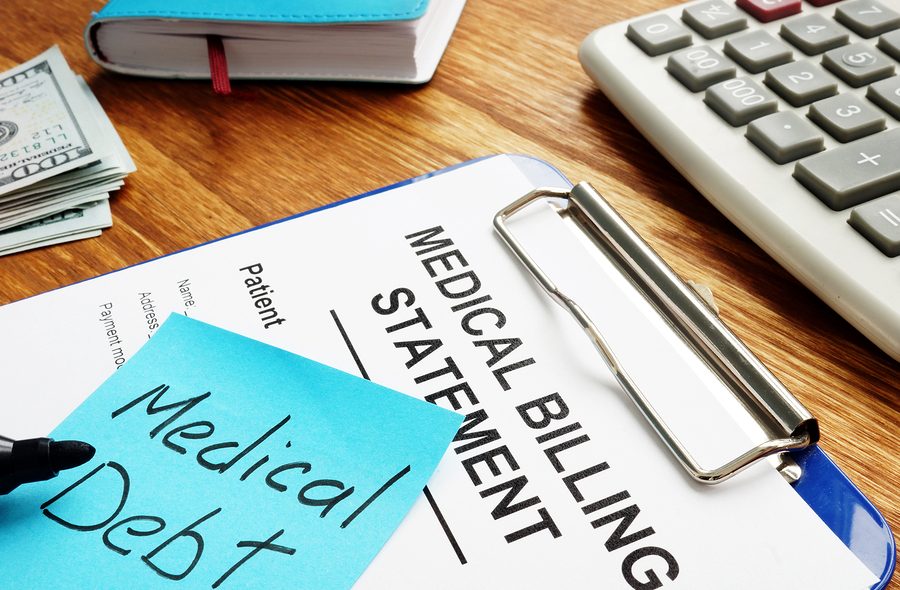
Several states have recently enacted laws to help alleviate the burden of medical debt for individuals who are low-income and who are struggling to pay these bills. At least 10 states, including Maine, Maryland, New Mexico, and Connecticut have passed with provisions in them that heavily affect healthcare providers and third-party debt collection agencies. These provisions include requirements for hospitals to give financial assistance to patients with lower incomes and to limit the aggressive collection practices used to collect on these debts.

According to a recent study of credit reports from Transunion, medical debt is the largest source of consumer debt currently in collections. In fact, when compared to all other types of debt, medical bills surpass both credit card and utilities in terms of other debt being collected.

Bankruptcy Law, Consumer Bankruptcy

Understanding Bankruptcy

Many people view bankruptcy as an intimidating and complicated process. While bankruptcy can have its complications, many of the fear surrounding it has more to do with consumers not fully understanding the process itself. Bankruptcy is a legal proceeding that allows individual consumers or businesses who are struggling with debt to eliminate these debts and start over. The process is meant to help consumers and is not something to be feared.

All bankruptcy filings are heard in special federal courts set up throughout the 50 states. Bankruptcy procedures are governed by the U.S. Bankruptcy Code, although states, including Florida, can enact their own rules that preempt federal procedures.

Credit Card Debt, Debt Relief, Medical Debt

Recent Study Reveals the Burden Debt Has on Mental Health

Carrying any amount of debt can be stressful, but carrying substantial amounts of debt can be debilitating to a consumer’s emotional well-being.  Debt can cause anxiety and depression, and the longer a person carries it, the more likely he or she will feel physical and emotional effects from it. A recent study highlighted just how severe the effects of insurmountable debt can be.

The data reviewed comes from the 2021 BC Consumer Debt Study released by BC Licensed Insolvency Trustees Sands & Associates. They surveyed over 1,700 consumers throughout British Columbia who declared personal bankruptcy or legally consolidated a debt.

The survey noted two specific trends regarding consumer debt. The largest proportion, approximately 32 percent, of people who responded to the survey said that they had had $25,000 to $49,999 of debt, not including mortgages or car loans.

Four out of five surveyed said they found that the main causes of their debt were completely outside of their control. For example, 18 percent reported that their debt grew to the amount it was due to them needing to rely on credit to pay for essential costs of living that their income could not cover. Additionally, others reported that their debt was caused by other issues outside of their control, such as illness or health-related problems, the breakdown of a marriage or relationship, and job-related issues.

Of the consumers surveyed, more than 56 percent of them said that credit card debt was their largest source of debt before they entered formal proceedings to eliminate their debts. Payday loans were the main source of debt for approximately six percent of those polled.

Individuals surveyed reported that being in such deep debt negatively affected their well-being. In terms of emotional well-being, 77 percent said their mental health suffered. Four out of five individuals said they constantly worried about being in debt. Three in four surveyed said debt caused them anxiety.

Even more concerning, one in six individuals surveyed said that the stress of carrying large amounts of debt resulted in them contemplating or thinking of suicide.

Mental health was not the only thing affected by debt. Fifty-three percent said that their physical health likewise suffered.

One major issue occurs when the consumer is not truly aware of how much he or she actually owes, resulting in the individual’s finances spiraling out of control. The stress that results from this debt can be debilitating to the person’s mental well-being. Approximately 68 percent reported that they concluded that debt was a major problem when it became a source of major stress in their lives. Sixty percent (60%) said they realized debt was a problem when they could only make minimum payments, while fifty percent (50%) said they realized debt was a major problem when their balances never went down from month to month. Unfortunately, at that point, their debt had grown to a figure that they could not control, forcing them into either bankruptcy or other sources of debt relief.

For more information, the full study can be accessed here.

If you have questions on this topic or are in financial crisis and considering filing for bankruptcy, contact an experienced Miami bankruptcy attorney who can advise you of all of your options. As an experienced CPA as well as a proven bankruptcy lawyer, Timothy Kingcade knows how to help clients take full advantage of the bankruptcy laws to protect their assets and get successful results. Since 1996 Kingcade Garcia McMaken has been helping people from all walks of life build a better tomorrow. Our attorneys’ help thousands of people every year take advantage of their rights under bankruptcy protection to restart, rebuild and recover. The day you hire our firm, we will contact your creditors to stop the harassment. You can also find useful consumer information on the Kingcade Garcia McMaken website at www.miamibankruptcy.com.

Bankruptcy Law, Consumer Bankruptcy, Legal Awards

Miami Bankruptcy Attorney Timothy S. Kingcade Receives the Prestigious AVVO Clients’ Choice Award 2022 for the Ninth Consecutive Year

Managing Shareholder, Timothy S. Kingcade of the Miami-based bankruptcy law firm of Kingcade Garcia McMaken has received the 2022 AVVO Clients’ Choice Award. To obtain this award, an attorney must receive five or more exceptional client reviews in the same year. Kingcade has been awarded the Clients’ Choice Award for the following years: 2014, 2015, 2016, 2017, 2018, 2019, 2020, 2021 and 2022.

One of attorney Kingcade’s clients had this to say on AVVO: I needed an attorney for bankruptcy and chose Attorney Timothy Kingcade of Kingcade Garcia McMaken, P.A. From start to finish, they were very helpful and answered all of my questions. I would definitely refer them to any of my friends that needed a bankruptcy attorney. All the staff was very knowledgeable of my needs. You will not be disappointed. This is a Class A firm.

Click here to read all of Miami Bankruptcy Attorney Timothy Kingcade’s client reviews on AVVO.  Timothy has also earned a “Superb” 10.0 AVVO rating in the area of bankruptcy law, the highest rating an attorney can receive.  The rating is calculated using a mathematical model, which takes into consideration the years an attorney has practiced law, their professional achievements, discipline history and industry recognitions.  The rating is completely objective and unbiased.  Attorneys cannot pay or petition the site to have their rating changed, which makes AVVO one of the most respected lawyer rating services in the country and an invaluable legal resource for consumers.

Attorney Timothy S. Kingcade is dedicated to helping people from all walks of life take advantage of their rights under bankruptcy protection to restart, rebuild and recover. Timothy is a certified public accountant (CPA), which allows him to better understand tax-motivated bankruptcy cases against the IRS. Timothy’s vast experience and expertise in the area of bankruptcy law allow him to know what bankruptcy trustees in the Southern District of Florida are looking for, preventing his clients from some of the pitfalls that can lead to the dismissal of a bankruptcy claim.

###

Miami-based Kingcade Garcia McMaken, P.A. was established by managing partner and bankruptcy attorney, Timothy S. Kingcade in 1996. The firm represents clients throughout the State of Florida in Chapter 7 bankruptcy and foreclosure defense cases. The firm is committed to providing personalized service to each and every client, clearly explaining the options according to the unique circumstances of his or her life. The office environment and the service provided are centered on a culture of superior client care for the financially disenfranchised. All partners and associates at Kingcade Garcia McMaken P.A. specialize in consumer bankruptcy and foreclosure and have dedicated their practices to this area of the law. Additionally, all attorneys and staff members at the firm are bilingual speaking Spanish.

student loan debt, Student Loans

Navient Student Loan Settlement Focuses on Delinquent Borrowers

A settlement has been reached as of January 13, 2022, involving student loan servicing company, Navient, and approximately 400,000 student loan borrowers. This settlement provides some much-needed debt relief to hundreds of thousands of delinquent borrowers.

The lawsuit alleges that Navient encouraged student loan borrowers who were behind on their loan payments to enter into costly long-term forbearance programs that kept them in debt. Additionally, borrowers alleged that Navient likewise encouraged them to take on private loans which the borrowers were not able to pay back. To hold the loan servicing company accountable, lawsuits were filed by several states and were joined by 39 attorneys general.

The settlement specifically focuses on student borrowers who took out loans to attend for-profit colleges between the years 2002 and 2014. In the settlement, Navient said they will cancel $1.7 billion in private student loan debt for approximately 66,000 borrowers. In addition, they said they would pay $95 million in restitution for 350,000 federal student loan borrowers.

The goal of this settlement and the reason behind the lawsuit is to prevent predatory lending practices is accused of doing to borrowers.  The lawsuit claimed that Navient encouraged borrowers who were not able to make their loan payments to enter forbearance programs instead of income-drive repayment plans. While forbearance programs do help borrowers in a temporary bind, they end up being much costlier in the long run and can often push the borrower even deeper into debt. Investigations into Navient practices found that employees in the call center were pushed to recommend borrowers go into forbearance programs instead of recommending programs that would be much better for the borrower’s financial situation.

Another predatory practice found through investigations into Navient’s practices involved pushing borrowers to apply for subprime private student loans even knowing that the borrowers had low credit and a high likelihood that they would not be able to repay the private loans.  Most students who took out these private loans were attending for-profit institutions. However, under federal law, school tuition payments must be at least 90 percent federally funded, therefore making the schools more dependent on federal funding instead of private.

Navient adamantly denied the claims in the lawsuit. They stated the settlement was entered into to avoid financial burden and time in litigation.

Borrowers who are eligible for debt cancellation under the settlement include those who took out private subprime student loans between 2002 and 2014. These loans were mostly taken out through Navient’s predecessor, Sallie Mae. Loan cancellation is available for borrowers who were behind on their private loan payments for at least seven consecutive months prior to June 30, 2021. If a borrower was current on his or her loan obligations, that person would not be eligible for cancellation.

In addition, borrowers who received a non-subprime private student loan to attend a for-profit educational institution listed specifically in the settlement, including DeVry University and University of Phoenix, are also eligible for debt cancellation.

Debt cancellation will be available for borrowers from 38 states and the Washington D. C., who took out federal loans through Navient and were in forbearance for at least two years between 2009 and 2017.

Please click here to read more.

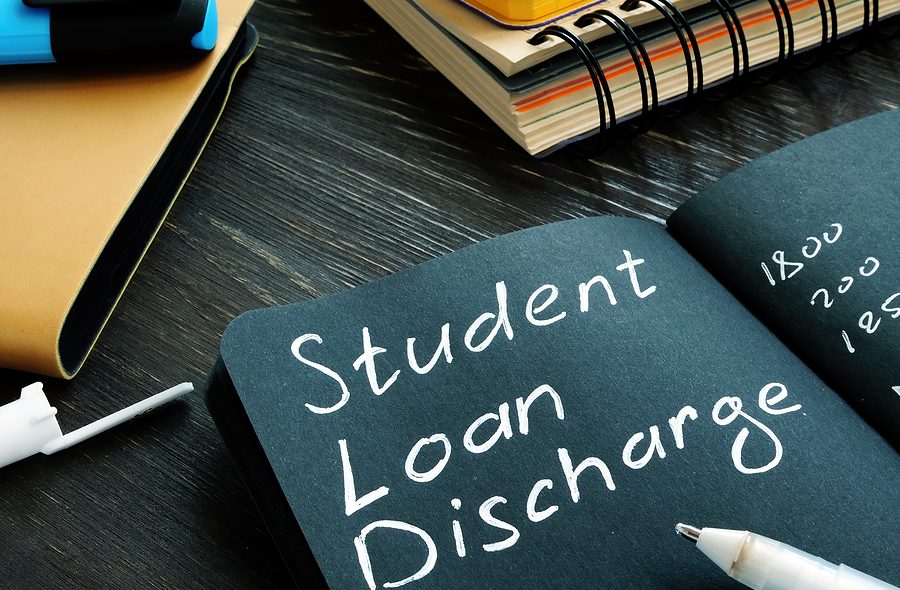
For borrowers who are struggling with student loan debt, relief options are available.  Many student loan borrowers are unaware that they have rights and repayment options available to them, such as postponement of loan payments, reduction of payments or even a complete discharge of the debt. There are ways to file for bankruptcy with student loan debt.  It is important you contact an experienced Miami bankruptcy attorney who can advise you of all your options. As an experienced CPA as well as a proven bankruptcy lawyer, Timothy Kingcade knows how to help clients take full advantage of the bankruptcy laws to protect their assets and get successful results. Since 1996 Kingcade Garcia McMaken has been helping people from all walks of life build a better tomorrow. Our attorneys help thousands of people every year take advantage of their rights under bankruptcy protection to restart, rebuild and recover. The day you hire our firm, we will contact your creditors to stop the harassment. You can also find useful consumer information on the Kingcade Garcia McMaken website at www.miamibankruptcy.com.