Consumer Debt, Credit Card Debt

How to Pay Down Credit Card Balances with High Interest Rates

Credit card debt has traditionally been one of the more difficult consumer debts to conquer. This is in large part because most credit card balances come with significantly high interest rates. The larger a consumer’s balance gets, the more difficult it can be to tackle the debt. While paying down credit card debt can be a challenge, however, it is not impossible. It takes proper planning and discipline but paying down a credit card balance on a card with high interest rates is possible.

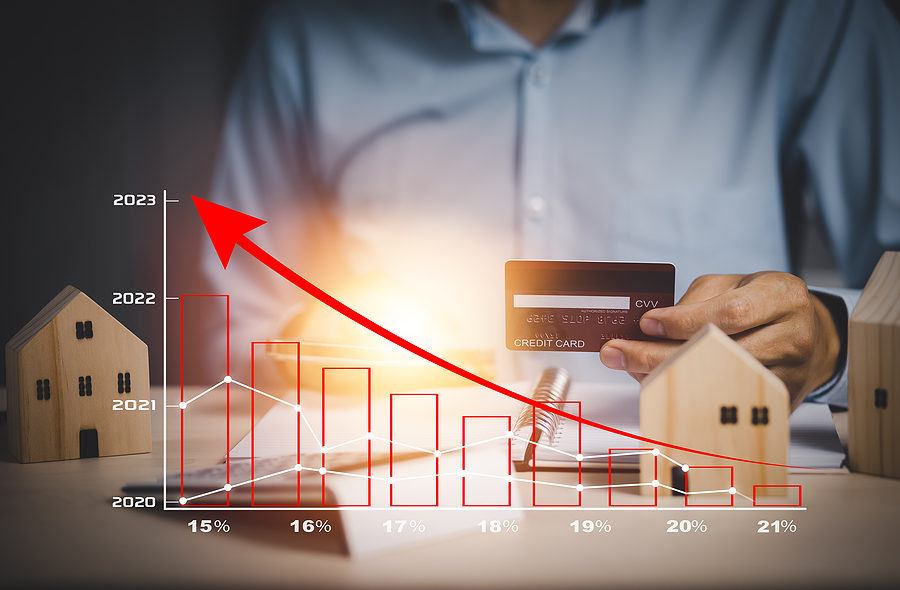
According to LendingTree, the average annual percentage rate on a new credit card is over 20 percent, and rates only seem to be increasing over time, especially as the cost of living continues to rise.  This trend presents a major problem for American consumers with high credit card balances. In fact, according to reports from the Federal Reserve Bank of New York, credit card balances reached a high of $841 billion in the first quarter of 2022.

Foreclosures, Housing Market Trends

Florida’s Mortgage Delinquency Rates Increase, Slightly Higher than National Average

Mortgage delinquencies slightly increased from April to May 2022, but Florida’ mortgage delinquency rates have increased more than the national average. Nationwide, one in every 4,549 housing units had a foreclosure filing in May 2022, according to a recent report issued by Knight Data & Analytics. Florida led all 50 states with a high rate of one in every 2,788 housing units.

The national delinquency rate decreased in May 2022 to a low of 2.75 percent. However, Florida’s delinquency rate stayed at a consistent 2.0 percent. Lenders initiated foreclosure proceedings on 22,099 properties in May 2022. While this number may be down one percent from the previous month, it is up 274 percent from one year ago.

Consumer News, Credit, Credit Card Debt

The Best Ways to Handle Your Credit During Inflation

The cost of living has continued to rise throughout the first half of 2022, leaving many consumers struggling to make ends meet. It seems the cost of everything has skyrocketed, from groceries to gas. As a result, three in five American consumers say they are living paycheck to paycheck. Many of these individuals are relying on credit cards to pay for necessary expenses, but unfortunately, adding to their credit card debt only complicates financial problems.

Consumer Bankruptcy, Tax Debt

Does Bankruptcy Eliminate Tax Debt?

By the time an individual reaches the point of filing for bankruptcy, he or she is likely inundated with all types of consumer debt, ranging from medical debt to credit card debt and possibly, tax debt. While a consumer bankruptcy case will eliminate a large portion of this debt, tax debt is not normally included in this list.

Taxes fall into the category of “non-dischargeable priority debt,” which means that the bankruptcy case will not eliminate them. Additionally, repayment of these claims is given priority over other creditors’ claims. However, circumstances do exist where tax debt can be discharged with a bankruptcy filing, but certain requirements must exist before that can happen.

Consumer Bankruptcy, Consumer News

DeSantis Vetoes Florida Bankruptcy Relief Bill

Gov. Ron DeSantis vetoed a measure last week that would have provided some much-needed relief for those struggling financially in Florida.  The specific measure, HB 265, was passed unanimously by both the state senate and legislature during the most recent legislative session, where it was quickly vetoed by DeSantis. This bill represents the third bill vetoed by the governor.

This bill would have given Floridians facing bankruptcy relief by providing them credit for any equity they may have had in their vehicle. The law would increase the bankruptcy exemption provided to debtors in their cars from $1,000 to $5,000.

Bankruptcy Law

What Debts Are Not Erased in Bankruptcy?

Not all debts can be discharged in a consumer bankruptcy case under the U.S. Bankruptcy Code. These debts will remain with the consumer even at the successful close of the Chapter 7 bankruptcy case.  While these debts may remain with the consumer, many of his or her other consumer debts will not. The goal is that with the discharge of other debts, the consumer will have extra money to be able to pay down these non-dischargeable debts.

For the most part, the consumer debts that are discharged include credit card debt, medical bills, past utility bills, personal loans and in some cases student loan debt. Many of these non-dischargeable debts cannot be eliminated due to public policy interests, such as child support.

Lawyers in the News, Legal Awards

KINGCADE GARCIA MCMAKEN RANKED #1 ON KEV’S BEST LIST OF “5 BEST BANKRUPTCY ATTORNEYS IN MIAMI”

MIAMI – (May 24, 2022) The Miami-based bankruptcy law firm of Kingcade Garcia McMaken  has earned the esteemed designation of being named to the Kev’s Best5 Best Bankruptcy Attorneys in Miami.”

“It is an honor to have received this award,” said Timothy S. Kingcade, Managing Partner of Kingcade Garcia McMaken. “Being recognized for the quality of our work reinforces the commitment we make each and every day to our clients.”

COVID-19, Foreclosure Defense, Foreclosures

Foreclosure Filings are up 132 Percent from 2021

The number of foreclosure filings is up by more than 132 percent when compared to 2021. According to statistics from Black Knight, the number of active foreclosure cases involving homes that have begun the foreclosure process on a seriously delinquent loan, went up by over than 7,000 cases in March 2022. This increase is the first one seen in a year-to-year comparison in over 10 years.

Additionally, more than 78,000 U.S. properties had a foreclosure filing during the first quarter of 2022. This figure is 39 percent higher from the previous quarter and 132 percent more when compared to one year ago, according to figures from ATTOM. Black Knight also reports that the number of serious mortgage delinquencies, mortgages that are 90 days or more past due, are 70 percent higher than they were before the COVID-19 pandemic hit in 2020.

Debt Collection, Debt Consolidation, Debt Settlement

Can Settling a Debt Harm Your Credit?

Escaping debt can be a long, arduous process. Many times, consumers find success in working with the creditor directly on settling the total amount owed, satisfying the debt by paying an amount that is much smaller than what was originally owed. While debt settlement can lift the burden carrying a large amount of debt places on a consumer, it also comes with its negative attributes, as well. In fact, according to new reports, debt settlement can actually end up harming a consumer’s credit score more than it helps.

A debt settlement can lower a person’s credit score by 100 points or more, according to the National Foundation for Credit Counseling. It can take up to seven years to recover from that negative hit.  

COVID-19, Credit Card Debt

Seventy-Five Percent of Americans Have Missed Credit Card Payments Due to COVID-19 Pandemic

The COVID-19 pandemic has pushed many Americans into financial struggles. The disruption to employment, childcare, and school routines crippled the economy and forced millions of women and families to the financial brink. While many have bounced back, others continue to struggle.

According to a new survey from Forbes Advisor, 75 percent of American consumers have reported missing payments or making a late payment at least once on their credit cards due to the COVID-19 pandemic.