
Debt Collection

Can a Creditor Come After Money that is Gifted?

The law allows for a certain amount of money to be gifted to individuals with no tax consequences on an annual basis. For the 2020 tax year, the gift tax exclusion amount is $15,000. Many aging parents take advantage of this exclusion to reduce their probate estate and avoid tax penalties by gifting up to this amount to their adult children annually. However, if the adult child they are gifting this money to has his or her own financial struggles and is being pursued for creditors, that money could be fair game. 

The problem is that this money is not protected if the receiving party is being pursued by a creditor for an outstanding debt. If the debt is valid and still legally collectible, money that is gifted to the consumer is reachable for purposes of satisfying what is owed.   

student loan debt, Student Loans

ITT Tech Student Loan Lender Must Pay $330 Million in Debt Relief to Former Students

An agreement has been reached between the attorneys general from 43 states and the now-closed ITT Technical Institute (ITT Tech). This agreement was part of a lawsuit brought by former ITT Tech students, requesting approximately $330 million in student loan forgiveness for 43,000 loans.

This lawsuit was a joint legal effort brought on by the Consumer Financial Protection Bureau (CFPB) and 43 different states. The settlement was made with PEAKS Trust, a private lending institution that is run by ITT and is also affiliated with several Deutsche Bank entities.

Debt Collection

How to Avoid Resetting the Clock on Old Debt

Once a debt is past a certain age, collecting on that debt through legal channels is barred under Florida’s statute of limitation laws. However, if the person owing the debt is not careful, the debt can be reset, making the amount owed legally collectible once more. Knowing what to do to prevent that from happening is important for this reason.

Understanding the Statute of Limitations

Every state has a set of laws that governs how long a person or entity has to bring a legal claim on any given issue, including debt collection. If a claim is brought after that period has passed, the claim will likely be barred. When it comes to debt collection, this timeline is five years from the date the debt began for written contracts, including personal loans. If the debt is one with a revolving account, including credit card debt, the statute of limitations is four years.

student loan debt, Student Loans

Half a Million Borrowers Petition President Trump to Have Their Student Loan Debt Cancelled

More than half a million student loan borrowers have signed a petition posted on Change.org, asking that President Trump sign an executive order that would effectively cancel all federally held student loans. This request makes up around 85 percent of all outstanding student loan debt.

The creator of the petition and founder of student loan advocacy group, StudentLoanJustice.org, Alan Collinge, stated he created this petition as he believes this would be the least expensive way, as well as the most effective way, to bring in trillions of dollars into the national economy. During a time of global pandemic, where the economy has taken a hit, he believes this would be the best way to give the economy a boost.

Coronavirus, COVID-19, Foreclosure Defense, Foreclosures

Covid-19 Mortgage Bailouts Decline, New Foreclosure Crisis Looming

Homeowners are struggling to keep up with their mortgage payments as the coronavirus (COVID-19) crisis continues. The mortgage bailouts offered by the federal government and private sector during the crisis have helped temporarily, but as the number of bailouts begin to decline, many homeowners are finding themselves facing the possibility of impending foreclosure.

According to figures from Black Knight, a mortgage technology and data firm, approximately 3.7 million borrowers are still receiving assistance through federal government and private sector mortgage forbearance programs.  This figure represents nearly seven percent of all active mortgages. Forbearance plans allow borrowers to temporarily delay monthly payments for anywhere between three months to a year.

Debt Collection, Debt Relief

How to Work with Debt Collectors When You Are Not Able to Pay

Dealing with debt collectors is stressful, especially when the person owing the debt simply does not have the financial resources to pay. It can be easy to fall behind on bills, and before too long, the consumer will find himself or herself juggling countless collection calls. These calls are not always pleasant. After all, the debt collectors have one job to do and that job is to receive payment on the debt. What is the best way to deal with debt collectors when an individual is not able to come up with the payment?

Stay Calm and Attempt to Work with the Collector

Debt collectors have a reputation of being aggressive when performing their jobs. However, it is important to stay as calm as possible when communicating with a debt collector. If a consumer agrees that he or she owes the debt and does not have the resources to do so, it may still be beneficial to at least attempt to work with the debt collector on paying on the debt. If the person does not have the money but still wants to pay, the collector may mark the consumer down as “refused to pay.” However, do not fear this label. It is essentially meaningless in the collection process. It does not make the collection case against consumer any worse or any better.

Debt Collection

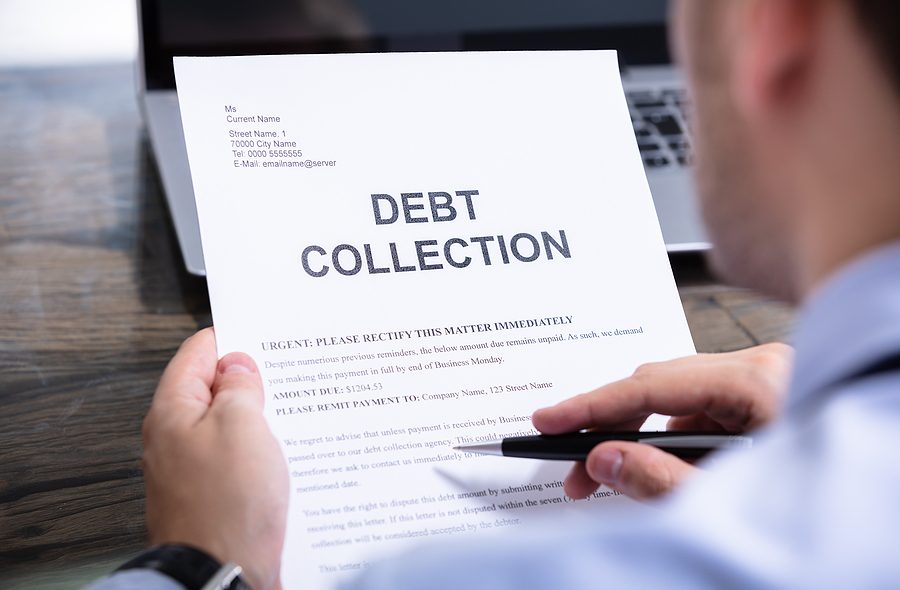
Facing Debt Collection? Know Your Rights.

When someone is facing debt collection, it is important that person knows his or her rights.  The Fair Debt Collection Practices Act (FDCPA) is a federal law that protects consumers against unfair collection practices, including:

  • Calling you repeatedly to annoy or harass you;
  • Trying to collect more than you owe;
  • Failing to send a written notice of the debt;
  • Threatening violence, using profanity or offensive language;
  • Threatening dire consequences (i.e. – lawsuits, criminal prosecution, wage garnishment, jail time, permanently ruining your credit);
  • Calling you before 8 a.m. or after 9 p.m.;
  • Revealing debt to third parties (i.e. – family, neighbors, friends, co-workers, etc.);
  • Contacting you at your work, after you have requested them to stop;
  • Failing to verify disputed debts;
  • Ignoring cease communication requests.
Credit Card Debt

What Happens to Credit Card Debt When a Person Dies?

After an individual dies, one of the big questions that comes up from those handling the estate of the deceased is what happens to that person’s debt? These debts can include medical bills, taxes, and credit card debt. One of the main concerns brought up by clients is whether they will be personally responsible for the credit card debt of their deceased relative. The good news is only the estate will be responsible for any outstanding debt and not the family of the deceased.

Whether the person has a will or no will, his or her estate will need to be processed through probate court. If the deceased had a will, he or she will have named a personal representative who will handle the estate, and if the person has no will, the court will appoint someone to administer the estate.